)
)
)
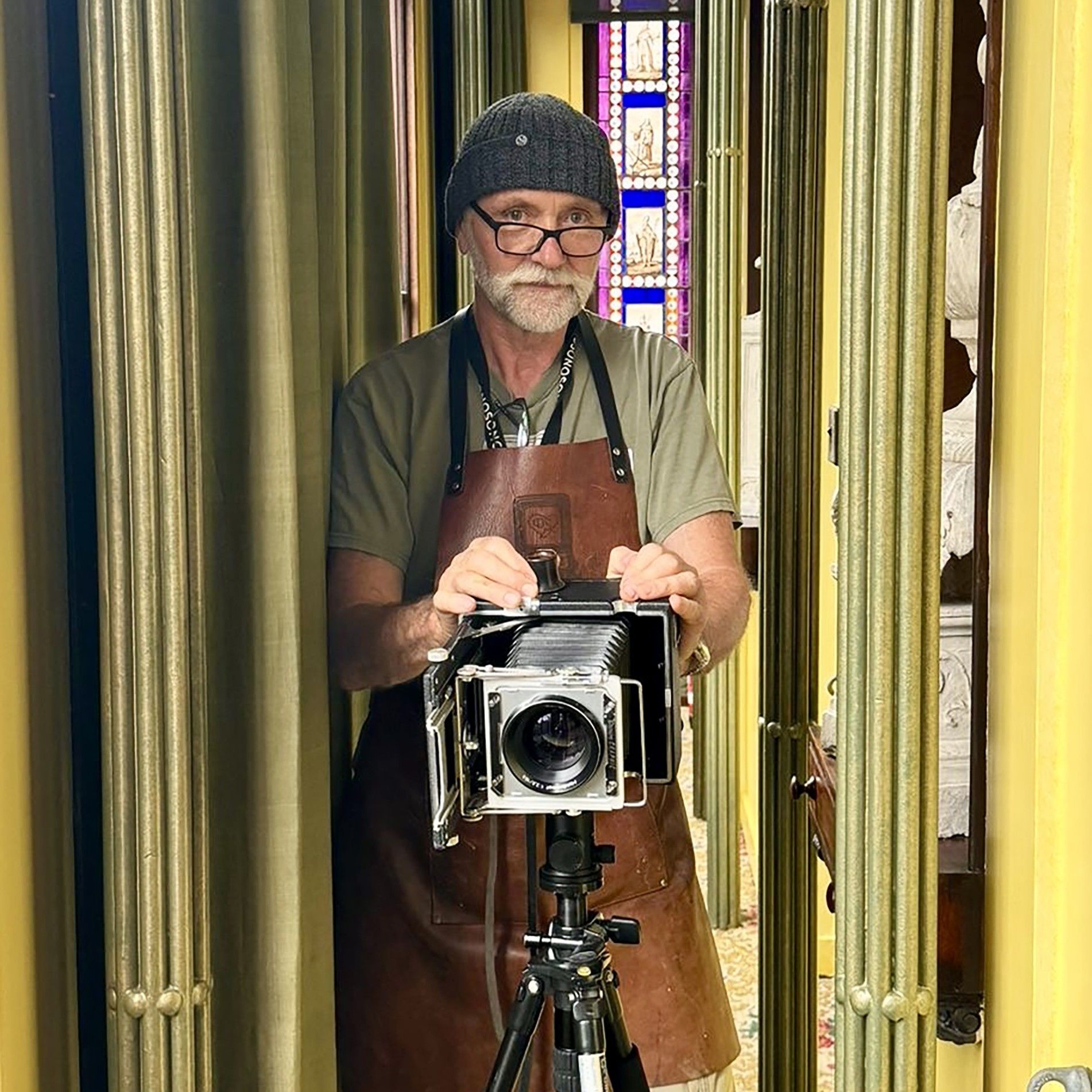
Dave Shrimpton
Dave Shrimpton is a portrait photographer who bridges the gap between the dawn of photography and the modern era. Working with the Wet Plate Collodion process from his Cambridge studio and on location, Dave uses vintage cameras and lenses dating from 1890 to create images that prioritize contemplation, composition, and the tactile beauty of the wet plate process.
While the digital world offers instant results, Dave focuses on the "slow" art of photography. He is a specialist in the 1851 wet plate collodion process, a method involving the alchemy of ether and silver nitrate to capture unique, one-of-a-kind images directly onto glass and tin plates.
Dave also runs Wet Plate Collodion workshops, teaches, and talks on the subject, catering to an ever-increasing demand for the "otherworldly" way this beautiful process from 1851 sees the world.
Significant Recent Projects & Exhibitions
Dave’s recent work has seen him following in the footsteps of his historical heroes:
Searching for Alice (Dimbola Museum & Galleries): This three-month solo exhibition served as a creative dialogue with his photography hero, the pioneering Victorian photographer Julia Margaret Cameron. Inspired by the image of Alice Liddell, Dave used the unpredictable wet collodion process to explore the "otherworldliness" of the medium and even captured the current museum staff, echoing Cameron’s own practice of photographing her household.
Sir John Soane’s Museum: In the summer of 2025, Dave was invited to this historic London museum to capture a series of wet plate collodion portraits on glass plates. Using the drawing room window light of No. 13 as his backdrop, he utilized the process to document the museum’s staff, blending the architectural genius of Sir John Soane with 19th-century photographic chemistry.
Award-Winning Craftsmanship
A winner of the British Journal of Photography’s "Portrait of Britain" (2022), Dave has also been recognized by the Royal Academy of Arts and the British Photography Awards.
Dave's work is a testament to the idea that there is still much to be discovered by using the Wet Plate Collodion process. Its "otherworldly" beauty stands as a permanent piece of art in an increasingly disposable digital world.
Sessions
-
Wet plate collodion - searching for Alice16-Mar-2026Analogue Stage
)

)
)
)
)
)
)
)
)